
What Size Property Do I Need for Solar Development?
Quick reference guide to Maryland solar farm property requirements—size, terrain, access, and grid proximity factors that determine development viability.
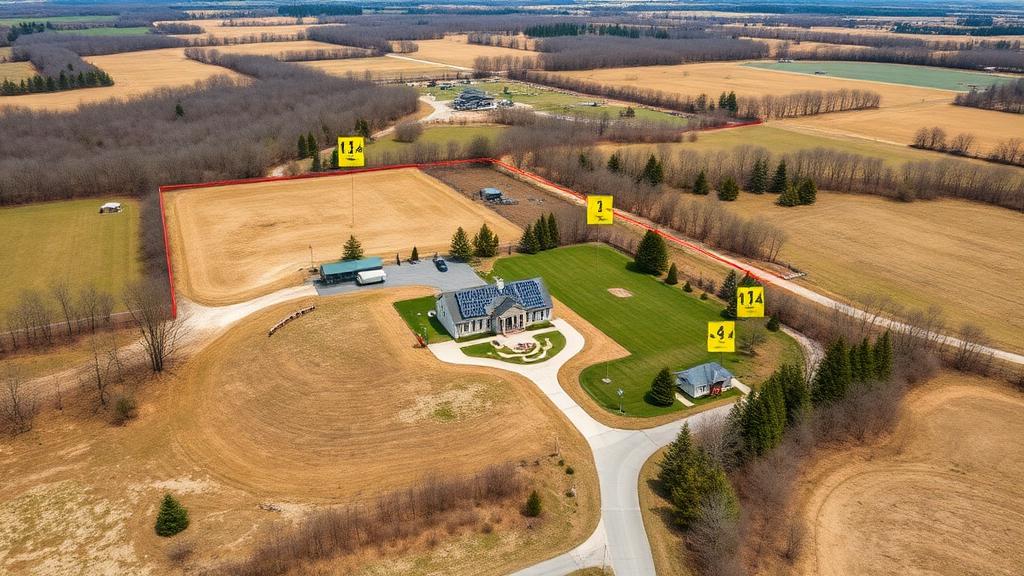
Minimum Property Size
20 acres minimum for utility-scale solar consideration in Maryland. Here's why:
- Solar panels + equipment require roughly 5-8 acres per megawatt
- Projects under 2MW often don't pencil economically for utility-scale development
- You need buffers, setbacks, and space for access roads
Sweet spot: 30-50 acres. Large enough to be economically attractive, small enough for faster permitting and development.
100+ acres: Premium properties that attract competitive offers from multiple developers.
Terrain Requirements
What Works
- Relatively flat land: Slopes under 10% are ideal. Up to 15% can work but increases development costs.
- South, southeast, or southwest facing: Maximizes sun exposure
- Open fields: Already cleared or easily cleared land
- Minimal wetlands: Some wetlands are okay if confined to edges
What Doesn't Work
- Heavily wooded areas requiring extensive clearing
- Steep slopes over 20%
- Large wetland sections in prime areas
- Rock outcroppings or quarry areas
- Heavy tree shading from adjacent properties
Grid Connection Distance
This is often the deciding factor:
- Within 1 mile of transmission lines: Excellent. Connection costs manageable.
- 1-2 miles: Good. Still economically viable.
- 2-3 miles: Feasible but reduces developer interest and lease rates.
- Beyond 3 miles: Usually not viable unless property is exceptionally large or transmission upgrade is already planned.
What lines matter: Not all powerlines work. Developers need distribution lines capable of handling megawatts of capacity—typically 34.5kV or higher. The small residential lines along roads usually don't cut it.
Access Requirements
- Road frontage: Public road access required for construction equipment
- Road quality: Existing roads should handle heavy trucks during construction
- Right of way: Clear access for construction and maintenance vehicles
Properties landlocked without road frontage can work if you can secure access easements, but it complicates development.
Zoning and Land Use
Maryland counties have different solar zoning rules:
- Agricultural zoning: Most common for solar in Maryland. Usually requires special exception or conditional use permit.
- Industrial zoning: Sometimes simplest approval path
- Residential zoning: Most restrictive. Large-scale solar often not permitted.
Developers handle rezoning and permitting, but existing favorable zoning makes your property more attractive.
Environmental Constraints
Factors that slow down or stop projects:
- Endangered species habitat: Requires extensive surveys and mitigation
- Historic properties: Within viewshed of historic sites may face restrictions
- 100-year floodplain: Usually not developable for solar
- Critical area buffers: Properties near Chesapeake Bay face additional scrutiny
What If Your Property Doesn't Check Every Box?
Don't self-disqualify. Developers evaluate properties holistically. Maybe your land is slightly smaller but has excellent grid access. Or it's a bit further from transmission but perfectly flat and already cleared.
The only way to know is to have a developer evaluate it. We've developed successful projects on properties that didn't seem ideal on paper because other factors compensated.
Quick Self-Assessment
Your property likely qualifies if you can answer yes to these:
- At least 20 contiguous acres available for solar
- Mostly flat or gently rolling terrain
- Public road access
- You can see powerlines from the property (or they're nearby)
- Minimal forest cover or cleared for agriculture
Get a Free Property Assessment
Matrix Solar evaluates Maryland properties remotely using GIS mapping, grid analysis, and zoning review. We can give you an initial assessment in 48-72 hours at no cost.
Request Property AssessmentRelated Articles
How Much Does Solar Land Lease Pay in Maryland?
Current Maryland solar land lease rates and payment structures explained.
Maryland County Solar Regulations: Developer's Guide
Navigate zoning and regulations across Maryland's 23 counties.
Choosing the Right Maryland Solar Developer
5 critical questions to ask before signing any solar lease.