What to Expect During Solar Farm Construction on Your Maryland Land
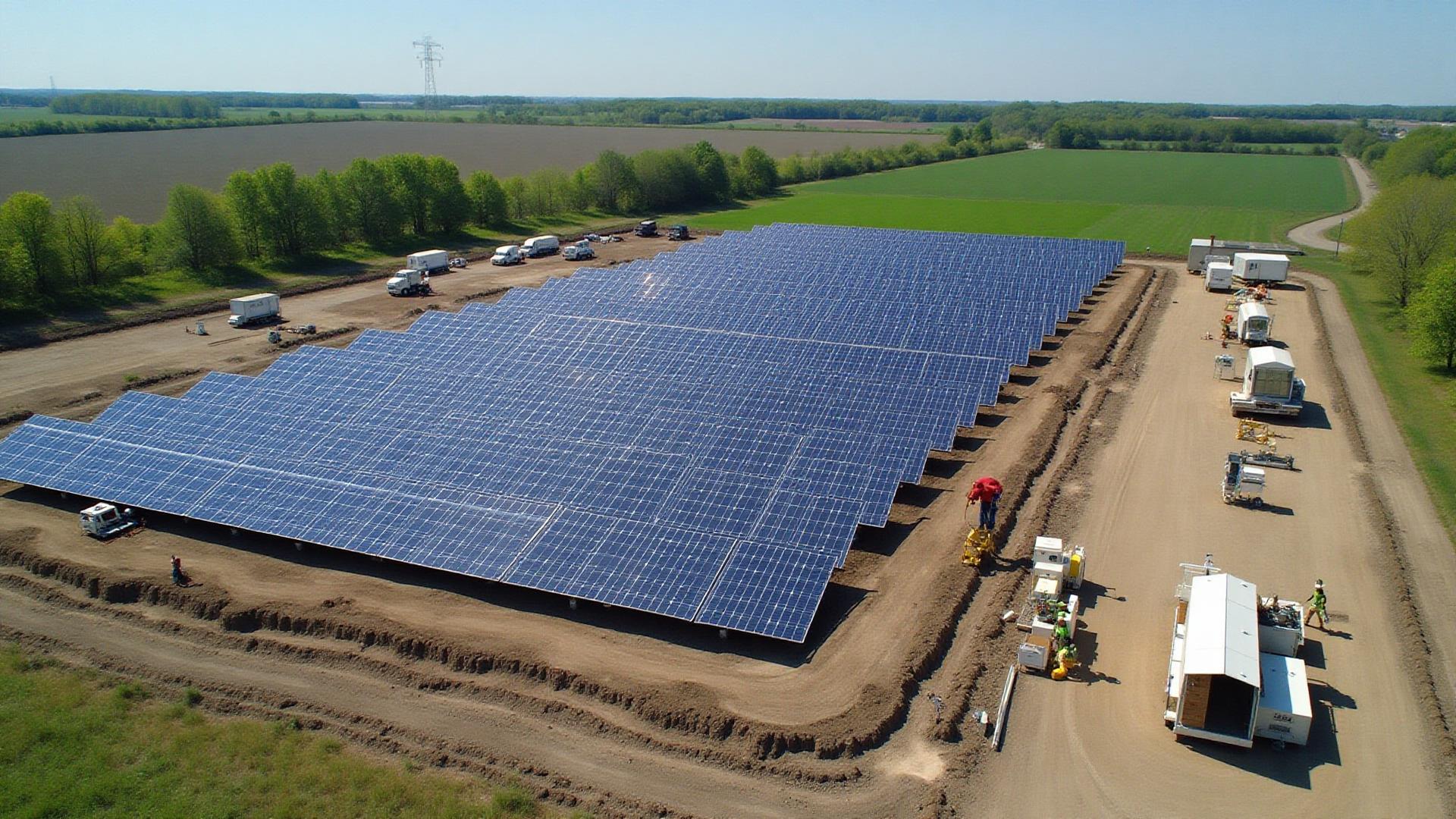
I get asked constantly by landowners: what's it actually like when construction starts? Will my property look like a construction zone for years? How disruptive is it? Let me walk you through exactly what happens based on our Maryland projects.
The Bottom Line First
Construction typically takes 6-9 months from first equipment arrival to final commissioning. Yes, there will be trucks, workers, and activity during that time. But it's not like building a highway or a housing development. Solar farm construction is surprisingly low-impact compared to most construction projects, and the timeline is faster than you'd think.
Pre-Construction: The Setup Phase (Weeks 1-2)
Before the real construction starts, we need to prep the site. This means:
- Site surveys and staking: Surveyors mark exactly where everything will go. You'll see orange stakes and flags all over the property—it looks messy but it's necessary.
- Tree clearing (if needed): We clear only what's required for the arrays and access roads. Maryland's forest conservation laws are strict, so we minimize this as much as possible.
- Erosion controls: Silt fencing goes up around the perimeter and along drainage areas before we disturb any soil.
- Construction entrance: We build a stabilized entrance to keep mud off public roads. County inspectors care a lot about this.
Phase 1: Site Work and Access Roads (Weeks 2-6)
This is the dustiest, messiest phase. Heavy equipment moves earth, builds roads, and levels areas for equipment pads.
What You'll See:
- Bulldozers and excavators working on grading
- Dump trucks hauling gravel for roads
- Temporary construction fencing going up
- Dust (we use water trucks to keep it down)
What to Expect:
This is the noisiest phase. You'll hear equipment from around 7am to 5pm, Monday through Saturday. We don't work Sundays on most projects. If you live on the property, you'll definitely notice this phase. If you're a quarter-mile away, it's more like background noise.
Phase 2: Pile Driving (Weeks 6-10)
Solar panels mount on steel posts driven into the ground. We use a specialized pile-driving machine that looks like a cross between a tractor and an industrial robot. It's actually pretty cool to watch.
The Process:
- Each pile goes 6-8 feet deep (no concrete needed in most Maryland soils)
- Spacing is precise—typically 15-20 feet apart in neat rows
- A good crew can drive 500-700 piles per day
- The whole property starts to look like a steel forest
Noise Level:
The pile driver makes a rhythmic hammering sound. It's loud up close but not ear-splitting like construction blasting. Most neighbors describe it as noticeable but not terrible—kind of like a distant woodpecker on steroids. The saving grace is that it's repetitive and predictable, not random jarring noises.
Phase 3: Racking Installation (Weeks 10-14)
Once the piles are in, we install the racking system—the aluminum frames that hold the solar panels. This phase is quieter and involves:
- Crews with hand tools and small pneumatic wrenches
- Delivery trucks bringing pre-assembled racking sections
- Workers moving systematically through the rows
- Gradual transformation as the structure takes shape
This is when the project starts looking like a solar farm. From a distance, you can see the angled rows forming. It's actually kind of satisfying to watch the progress at this stage.
Phase 4: Panel Installation (Weeks 14-20)
The panels arrive on large trucks, typically from West Coast ports. Each panel weighs about 45-50 pounds, and a 100 MW project uses 200,000+ panels.
The Logistics:
- Panels are staged in organized stacks across the site
- Installation crews work in teams, moving panel-by-panel down each row
- Panels clip into the racking system (no welding or loud work)
- You'll see anywhere from 20-50 workers during peak installation
The Pace:
A good crew can install 1,000-1,500 panels per day. With multiple crews working, this phase moves surprisingly fast. It's like watching a massive jigsaw puzzle come together.
Phase 5: Electrical Work (Weeks 16-24, overlaps with panels)
While panels are going up, electricians are running cables, installing inverters, and building the substation. This is specialized work requiring licensed electricians.
What's Happening:
- Trenching: Cables run underground between panel rows (we restore the ground afterward)
- Inverter Installation: Large metal boxes spread throughout the site that convert DC to AC power
- Substation Construction: The most complex part—where our electricity connects to the utility grid
- Testing: Constant quality checks as each circuit is completed
Phase 6: Final Grading and Seeding (Weeks 22-26)
As electrical work wraps up, we restore the site. This means:
- Removing construction debris and temporary fencing
- Final grading to ensure proper drainage
- Seeding with pollinator-friendly native vegetation
- Installing permanent security fencing
- Setting up monitoring equipment and cameras
The Final Sprint: Testing and Commissioning (Weeks 26-30)
The project is built, but it can't start generating power until it passes multiple inspections and tests:
- County electrical inspection
- Utility interconnection testing
- Performance testing of every string and inverter
- Safety system verification
- Final walkthrough with utility engineers
Once everything checks out, the utility "energizes" the line, and the project starts generating power. It's surprisingly anticlimactic—no ribbon cutting, just flipping a switch and watching the monitoring system show power flowing.
Real Numbers from Recent Maryland Projects
Frederick County 80 MW Project (2024):
- Construction Start: March 15, 2024
- Commercial Operation: November 8, 2024
- Total Duration: 7.5 months
- Peak Workers On-Site: 75 people
- Total Truck Trips: Approximately 3,200 (over 7 months)
- Weather Delays: 12 days total (rain and cold)
Managing Disruption: What Matrix Solar Does
We've built enough projects to know construction impacts neighbors and landowners. Here's how we minimize problems:
Communication:
- Weekly update emails to landowners and immediate neighbors
- Direct phone number for the construction manager
- Advance notice of especially noisy or disruptive activities
- Regular site walks with landowners to see progress
Dust Control:
- Water trucks operate daily during dry weather
- Gravel on access roads to minimize dust generation
- Street sweeping if we track mud onto public roads
Traffic Management:
- Coordinated delivery schedules to avoid peak traffic times
- Construction entrance designed to keep mud off roads
- Flaggers at the entrance during heavy delivery periods
Hours and Noise:
- Standard hours: 7am-5pm, Monday-Saturday
- No Sunday work except in emergencies
- Loudest work (pile driving) scheduled for mid-day when possible
- Generator use minimized (most equipment runs on diesel)
Living On-Site During Construction
Some landowners live on the property being developed. What's that like? Honest answer: it's not the most peaceful 6-9 months of your life, but it's manageable.
Our construction leases typically require 300-500 foot setbacks from residences. You'll see and hear the work, but it's not overwhelming. Most landowners tell us it's less disruptive than they expected. The key is communication—if something is bothering you, tell us immediately so we can adjust.
Weather and Seasonal Considerations
Maryland weather definitely affects construction schedules:
- Spring: Ideal for starting projects, but April rain can delay sitework
- Summer: Great for construction, but heat slows worker productivity
- Fall: Best construction weather, everyone wants to finish before winter
- Winter: We can work through mild winters, but frozen ground and snow cause delays
What About the Land?
Landowners worry about construction damage. Fair concern. Here's reality:
- Compaction: Heavy equipment does compact soil along roads and work areas. We restore these areas and plant vegetation.
- Drainage: We're required to maintain or improve drainage patterns. Engineering plans must show this.
- Erosion: Temporary disturbance can cause erosion if not managed. That's why sediment controls are law in Maryland.
- Recovery: Within 6-12 months after construction, you'd be hard-pressed to see where equipment traveled outside the permanent roads.
After Construction: The Quiet Years
Once construction is done, the noise and activity disappear. A typical solar farm has zero employees on-site 95% of the time. Maintenance crews visit every few weeks, vegetation management happens 2-3 times per year, and that's about it.
The loudest thing you'll hear is the slight hum from inverters if you stand right next to them. From 100 feet away, you hear nothing.
Ready to Learn More About the Process?
Matrix Solar has refined our construction process through multiple Maryland projects. We understand local conditions, respect our landowner partners, and complete projects on schedule. If you're considering solar development, let's discuss what construction would look like on your specific property.
Related Articles
Maryland Solar Development Timeline: Complete Guide
A comprehensive guide to the solar development process timeline in Maryland, from initial assessment to project completion.
Solar Farm Environmental Impact in Maryland
Comprehensive analysis of environmental impacts including wildlife benefits and water quality improvements.
Maryland Solar Permitting Process
Navigate the complex permitting landscape for solar development in Maryland with expert guidance.